When I think about the automotive industry, and honestly, the technology sector at large, it's impossible not to immediately bring up Tesla. For me, it's not just a car company; it's a genuine force of nature that has reshaped our perception of what's possible in transportation and energy. We're talking about a company that dared to dream bigger, and often, delivered on those dreams in ways that many thought were utterly impossible. It's been quite a ride watching their journey, wouldn't you agree?
My interest in Tesla really kicked off with their early vision. Back when they started, the idea of a compelling, high-performance electric vehicle was, frankly, a bit of a niche fantasy. Most EVs felt like glorified golf carts. But then came the original Roadster. It wasn't perfect, absolutely not, but it certainly demonstrated that electric cars could be *desirable*. It showed us that zero emissions didn't have to mean zero excitement. That was a game-changer, plain and simple.
The Core Proposition: Revolutionizing Personal Transport
Tesla's strategy from the very beginning has always felt different. They didn't just want to make electric cars; they wanted to make electric cars better than gasoline cars in every conceivable way. This meant pushing boundaries on everything from performance to software. It’s why when you drive a Tesla, it often feels more like a gadget on wheels than a traditional car. And honestly, I think that's a huge part of their appeal.
- Performance: My first time experiencing the acceleration of a Model S P100D was genuinely shocking. It just pulled and pulled with an immediacy that internal combustion engines simply can't match. They didn't just build electric cars; they built electric rockets.
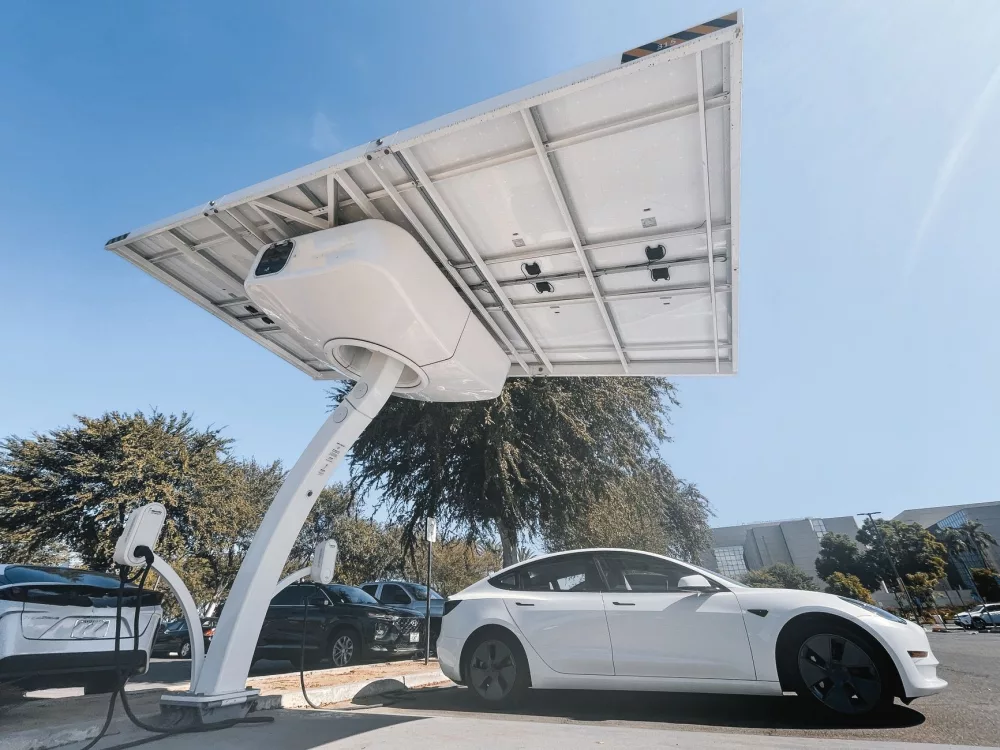
- Range Anxiety Mitigation: Early on, range was a massive hurdle for EVs. Tesla tackled this head-on, not just with larger batteries, but with the development of the Supercharger network. This wasn't a minor detail; it was absolutely critical for making long-distance EV travel a reality. I remember thinking, 'Wow, they're not just selling cars, they're building an ecosystem.'
- Software-Defined Vehicles: This is where I think Tesla really broke the mold. Over-the-air updates for new features, performance improvements, and bug fixes? That was unheard of in the automotive world. My regular car just gets older; a Tesla gets smarter. It's a fundamentally different ownership experience.
Beyond the Pavement: Energy and AI Ambitions
But to categorize Tesla purely as an automotive company would be missing a huge piece of the puzzle. I've always seen their mission as far broader: accelerating the world's transition to sustainable energy. This isn't just marketing fluff; it's genuinely reflected in their product portfolio outside of vehicles.
- Powerwall and Solar Roof: We've seen how they've integrated solar panels into roofing tiles, making home energy generation much more aesthetically pleasing. The Powerwall, their home battery solution, allows for energy independence and acts as a backup during outages. For me, these are crucial components in building a sustainable energy future, not just electric transportation.
- Megapack: On a larger scale, the Megapack batteries are transforming how utilities store and distribute renewable energy. These massive installations help stabilize grids, making intermittent sources like solar and wind more reliable. It's truly industrial-scale innovation.
And then there's the AI. I know a lot of people focus on Full Self-Driving (FSD) and its progress, or sometimes, its controversies. But Tesla's AI endeavors go much deeper. They're collecting an unbelievable amount of real-world driving data, which is like gold for training neural networks. Their custom AI chip, Dojo, is another example of their vertically integrated approach, aiming to process this data at scale. It's an ambitious play, and frankly, I'm fascinated by where it will lead.
The Manufacturing Imperative: Giga-factories and Vertical Integration
Manufacturing has always been a significant challenge for Tesla. Remember all those 'production hell' stories? I certainly do. Yet, they've also pioneered the concept of the 'Giga-factory' – massive, highly automated facilities designed to crank out vehicles and batteries at an unprecedented scale. They're trying to rethink manufacturing from the ground up, which is incredibly difficult but potentially very rewarding.
Their vertical integration strategy is something I find particularly interesting. They're not just assembling cars; they're designing their own chips, writing their own software, building their own battery packs, and even developing their own manufacturing processes. This level of control, while risky, allows for faster iteration and tighter integration of components. It's a high-stakes gamble, but it's clearly part of their DNA.
Challenges, Competition, and Cultural Impact
Of course, it hasn't all been smooth sailing. Tesla has faced its share of production delays, quality control concerns, and intense scrutiny over safety claims regarding their autonomous driving features. The competition has also intensified dramatically. Every major automaker now has serious EV offerings, and many startups are also vying for market share. It's a crowded field now, unlike when Tesla first started.
However, what I think is undeniable is Tesla's cultural impact. They made EVs cool. They forced traditional automakers to accelerate their electrification plans. They showed that direct-to-consumer sales could work, and that software could be a defining feature of a car. They created a passionate, almost cult-like following among their owners and investors. It’s an interesting dynamic, seeing how one company can command so much attention and influence.
Looking ahead, I can't help but wonder what's next. Will Cybertruck redefine the pickup market? Will robotaxis become a common sight? What new energy innovations will they unveil? Whatever it is, I'm pretty sure it won't be boring. Tesla has a way of keeping us all on our toes, and that, for me, is part of their enduring appeal. They've built something truly unique, and I'm excited to see how their story continues to unfold.